
Removing Fences Makes Elephants Healthier and Leaves the Landscape Intact
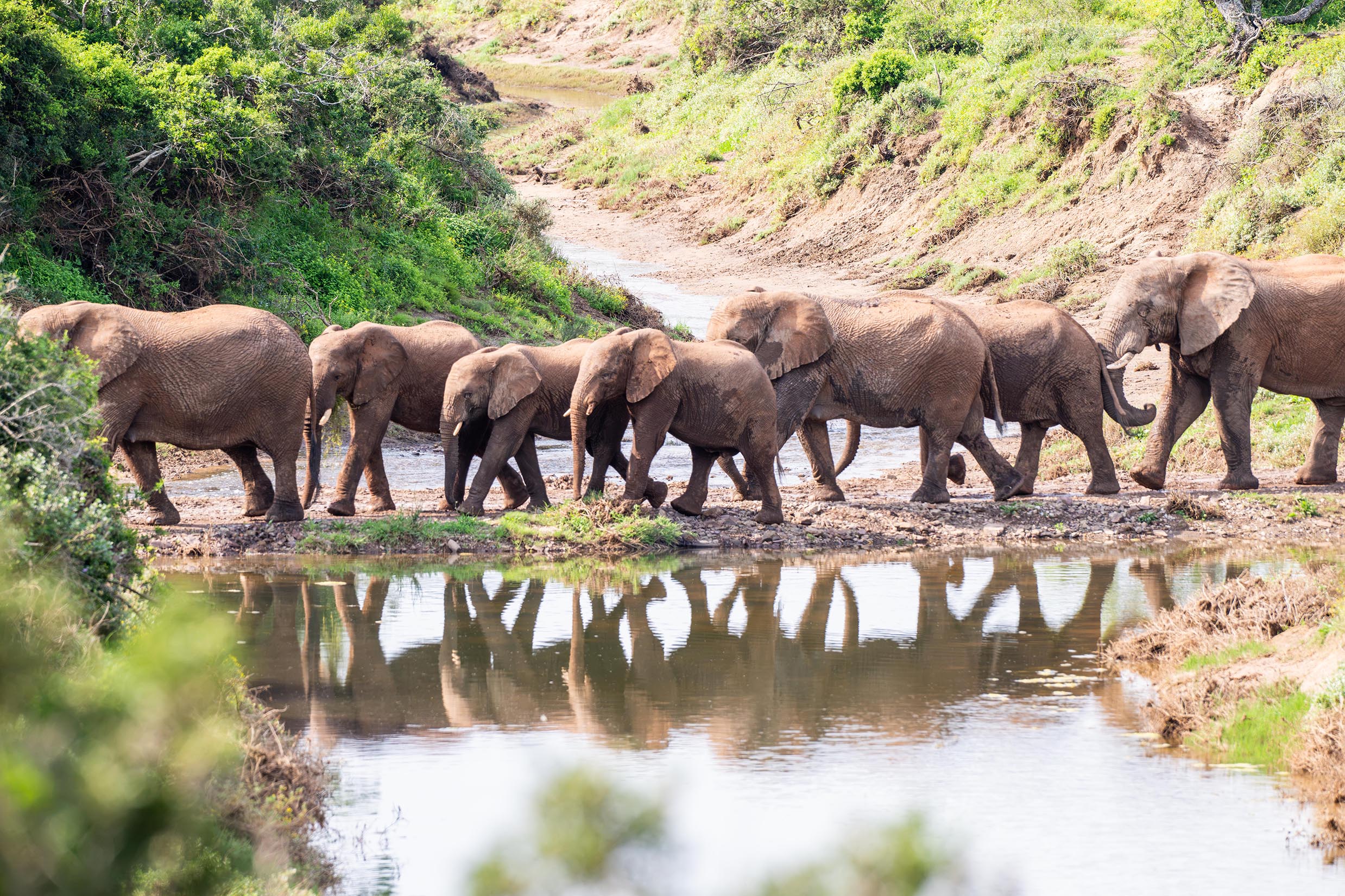
It's not that there are too many elephants — there's not enough space.
It’s not that there are too many elephants — there’s not enough space.
It's not that there are too many elephants — there's not enough space.”
CAPE TOWN, SOUTH AFRICA, September 17, 2026 /EINPresswire.com/ -- A new peer-reviewed study finds that expanding space is the most effective path to elephant well-being and ecosystem health.— Brooke Friswold
As public pressure builds to cull elephants in South Africa's fenced reserves, a new peer-reviewed study out of Kariega Game Reserve points to a different fix: give them more room. When researchers removed Kariega's main internal fence in January 2024, 75 elephants across five matriarchal herds shared a landscape for the first time. Tracked for three years, the results, published in Ecology and Evolution, challenge how elephant populations are managed in fenced reserves.
The findings are consistent: elephants grew less stressed, less aggressive, more socially bonded, and more dispersed, with one matriarch's home range more than doubling. Vegetation, the resource most often blamed for elephant damage, showed no greater degradation in newly occupied areas compared with areas elephants were restricted from.
"It's not that there are too many elephants — there's not enough space," said Dr. Brooke Friswold, lead author and Regional Director Africa, Bring The Elephant Home. "We need to focus on corridor creation, fence removal where possible, and allowing natural ecological processes to function as intended. Elephants are essential ecosystem engineers that help facilitate those natural processes, so conservation efforts should focus on enabling them to move more freely across the landscape."
The study drew on four approaches from August 2022 through mid-2025: GPS collars on herd leaders; 607 behavioral observation sessions; fecal hormone analysis; and satellite vegetation assessment. The results:
- Behaviour: Aggression fell 20 percent below pre-removal levels within 300 days, while social behaviors rose 66 percent. Elephants moved almost twice as much and foraged less, consistent with exploratory behavior.
- Stress: Faecal glucocorticoid metabolite concentrations, a validated physiological stress-related measure, declined significantly after fence removal (p = 0.008), even accounting for sex, age, season, temperature, and rainfall.
- Movement: One matriarch's home range more than doubled, from about 1,280 to 3,291 hectares, as seasonal rotations resumed and browsing pressure eased.
- Vegetation: No greater degradation in elephant-occupied areas than in non-elephant control sections, per satellite NDVI analysis.
"The study results support South Africa's vision for healthy, resilient elephant populations living in larger, more connected landscapes. They show that range expansion is a practical and more ethical alternative to population control," said Dr. Antoinette van de Water, co-author and Founder & Director, Bring The Elephant Home. "This evidence-based path supports natural social behaviour, ecosystem resilience, ecotourism, and long-term conservation, helping create landscapes where elephants, ecosystems, and people can thrive together."
South Africa has named fence removal and connectivity as national biodiversity goals, and SANParks' 2040 vision calls for corridor links between Addo Elephant National Park and Mountain Zebra National Park across Eastern Cape reserves. Kariega, a pioneer in fence removal, sits within that corridor and offers the first peer-reviewed evidence of what connectivity produces at the level of individual elephants.
Intensive management measures remain the dominant tools for managing elephant numbers in South Africa. This study asks a different question: rather than reducing numbers, how do we expand the space available?
"Aggression initially spiked after fence removal, mostly between elephants, but then dropped to levels even lower than before the fences were removed. That's important not only for elephant welfare, but also for tourism, researchers, reserve staff, and overall human safety," said Dr. Friswold. "Elephants began engaging in more affiliative and socially natural behaviors with one another, which creates more meaningful and interesting wildlife viewing experiences for tourists."
About the Study
Fence Removal Enhances Elephant Movement and Promotes Behavioural, Physiological and Ecological Functioning was authored by Brooke Friswold, Dr. Antoinette van de Water, Brett Mitchell, Sally House, Jaco Mitchell, Harin Aiyanna, Audrey Delsink, Marion Garaï, Andre Ganswindt, and George Gale. Published open access in Ecology and Evolution (2026, Vol. 16, e73619), DOI: 10.1002/ece3.73619.
Conducted with the Kariega Game Reserve and Kariega Foundation, and supported by Bring The Elephant Home, the Elephant Reintegration Trust, and the Elephant Conservation and Research Fund, with funding from Abri voor Dieren, Bring The Elephant Home, and the Petchra Pra Jom Klao Scholarship.
Learn more @ https://bteh.org/
Megan Evans
Bring the Elephant Home
+1 443-994-0140
email us here
Visit us on social media:
Instagram
Facebook
YouTube
What happens when elephants are given more space?
Legal Disclaimer:
EIN Presswire provides this news content "as is" without warranty of any kind. We do not accept any responsibility or liability for the accuracy, content, images, videos, licenses, completeness, legality, or reliability of the information contained in this article. If you have any complaints or copyright issues related to this article, kindly contact the author above.
